I Grew Up on LAN Parties—Now Everything’s a Lobby

You can jump between five different game lobbies in a night, but none of them feel like the one room that used to hold all your friends, all at once. That’s the gap: not latency, not graphics—presence. This piece isn’t a nostalgia reel; it’s a field note from someone who carried a tower PC to a friend’s place and now lives in a world where everything’s a lobby, plus a small playbook to bring some of that room-energy back.
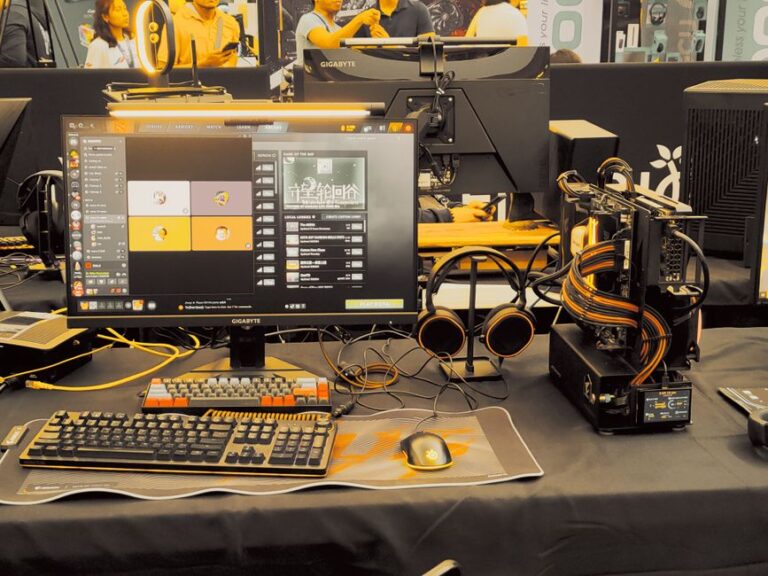
By definition, a LAN party is a social gathering where everyone hauls their own gear and links up locally to play. The early-’90s versions were famously physical: people dragged CRTs, towers, and snack bags into garages or living rooms, then ran Ethernet like they were wiring a spaceship. Accounts and retrospectives point to that era’s garages and attics stacked with monitors and cables, the whole crew in one place, literally shoulder to shoulder source.
That physical crowd mattered. When everyone’s in the same room, the game is only half the game. The other half is the noise: the unmuted laughs, the collective groan after a whiff, the instant roast when your friend face-checks a corner in Counter-Strike. We didn’t need a “social feature”—the room was the feature.
“back today we would do land parties and join everybody’s PCS all together … we will feel much closer because we were on the same area … nowadays we have many lobbies … but it’s not the same”
I don’t disagree that modern lobbies are more convenient and inclusive. They are. You can jump in from a dorm, a studio, or your parents’ place. You can meet people beyond your ZIP code and actually form friendships you’d never find limited to one living room. Accessibility wins here.
But that win has a cost. Every game fragments the crew into another lobby, another friend list, another party system. Even with Discord stitching it together, you feel a layer of glass between people. Old-school LANs forced a single shared context: one room, one vibe, one snack table. Online, the vibe is tabbed—DMs here, voice there, matchmaking elsewhere.
“they are more convenient and inclusive than the land Gatherings but then Gatherings are much better … you buy the food … it’s much much better than just meeting people online”
One of my early LAN nights was at a friend’s house. We piled up Cheetos and all the junk food we could justify, linked our PCs, and spent the evening swapping between Counter-Strike and Gunbound—long before League of Legends was even a thing. No one asked “what server?” or “who’s party lead?” We were physically lead, sitting in a circle of screens. When someone popped off, we didn’t clip it; we yelled. When the router hiccuped, we adjusted cables and made fun of whoever kicked the power strip. The troubleshooting itself felt like part of the co-op.
Today, everything’s a lobby, and every lobby is slightly different—party sizes, voice permissions, crossplay quirks, who can queue for ranked, who’s region-locked. Convenience scales up; cohesion thins out. That’s not a moral judgment; it’s a structural one. Rooms compress attention. Lobbies distribute it.
This is also where generational behaviors rub. I was born in ’93 and work in tech, so I try to track with younger habits, but I still side with the idea that the generation that saw life before and after the internet ended up better at switching codes quickly—plugging in and out, troubleshooting on the fly, and dealing with people in person when the Wi‑Fi fails. Older setups trained more social and practical muscles at once: carry, connect, configure, and coexist.
You can’t perfectly replicate a room, but you can reduce friction and rebuild some camaraderie in today’s lobbies. None of this requires new hardware; it’s about compressing attention the way a living room did.
Even with these rituals, some things don’t cross the wire. Smell of pizza in the box. The sound of two keyboards dueling in the same acoustic space. The instant, unmuted laughter that needs no push-to-talk. That’s okay to admit. Online lobbies solve distance; they don’t solve presence. And that’s the trade-off: more people, less room.
“this is the kind of stuff that actually happens in the lobby in Discord but I feel like you will never be the same as he used to be in the lan parties”
It’s easier than ever to make friends outside your household or hometown. That’s a real upgrade. Let that strength breathe by being intentional:
You can love the convenience of today and still miss the pressure-cooker of a single room. Both truths can stand. If you grew up wiring switches and now live in lobbies, you probably already feel the difference in your bones: the room assembled you; the lobby distributes you. The point isn’t to reject lobbies—it’s to bend them closer to a room.